Monthly Archives: September 2026

How Do Paper, Plastic and Metal Packaging Compare

How Do Paper, Plastic and Metal Packaging Compare

Walk down almost any store aisle and you will encounter three very different types of packaging within a matter of seconds. A cereal box made of folded cardboard, a bottle of shampoo molded from flexible plastic, and a can of soup formed from pressed metal all sit within arm's reach of each other, yet each one represents a completely different set of engineering decisions, material behaviors, and cost considerations. Comparing paper, plastic, and metal packaging is not really about declaring one option better than the others. It is about understanding what each material does well, where it struggles, and why manufacturers keep choosing all three depending on what the product actually needs.

This kind of comparison matters more than it might seem at first glance. Packaging choices affect shipping weight, shelf presentation, protection against damage, environmental footprint, and even how consumers perceive the product inside. Getting familiar with the practical differences between these three material families gives anyone involved in sourcing, retail, or product development a clearer path toward smarter decisions.

Paper Packaging: Where It Tends to Work Well

Paper and paperboard packaging cover a wide range of formats, from simple bags and wrapping paper to rigid corrugated boxes and folding cartons. What ties them together is a shared origin in wood pulp fiber, processed and pressed into sheets of varying thickness and strength.

One of the clearest advantages of paper-based packaging is how naturally it lends itself to printing and branding without requiring specialized coatings or additional processing steps. It also tends to be lighter than metal, which can meaningfully reduce shipping costs across large volumes. Many paper packaging formats are also widely accepted in curbside recycling programs, which makes end-of-life handling relatively straightforward for consumers in many regions.

That said, paper has real limitations. On its own, it offers very little resistance to moisture, oxygen, or grease. This is why so many paper-based packages include a coating or lining, whether that is a thin plastic film, a wax layer, or a specialty coating designed to add some barrier function without abandoning the paper base entirely. Without some kind of treatment, plain paper packaging is not a good fit for anything that needs to stay fresh for an extended period or that involves liquids.

Paper Packaging

Typical Paper Packaging Formats

  • Folding cartons for dry goods and consumer products
  • Corrugated shipping boxes for e-commerce and bulk transport
  • Paper bags for retail and food service
  • Coated paperboard for products needing light moisture resistance

Plastic Packaging: Flexibility Meets Function

Plastic packaging is arguably the most varied category of the three, ranging from soft flexible films and pouches to rigid bottles, tubs, and clamshells. The sheer range of plastic resin types available means packaging designers can tune properties like flexibility, clarity, and barrier performance to a fairly specific degree.

A major strength of plastic packaging is its ability to form tight, protective seals around a product. Many plastic films and containers offer meaningful resistance to moisture and oxygen transfer, which explains why plastic remains common for food items with longer shelf life expectations. Plastic is also relatively lightweight compared to metal and glass, which helps with transportation efficiency.

The tradeoffs are well known at this point. Traditional plastic packaging is often derived from petroleum-based sources, and not all plastic types are accepted equally across recycling systems. Some flexible plastic formats, particularly multi-layer laminates that combine several material types for barrier performance, can be genuinely difficult to recycle using conventional municipal systems. This has pushed considerable interest toward mono-material plastic structures and recycled content, though adoption still varies widely depending on the product category and region.

Plastic Packaging

Typical Plastic Packaging Formats

  • Flexible pouches and stand-up bags
  • Rigid bottles and jars
  • Clamshell containers for produce and baked goods
  • Shrink wrap and stretch film for bundling

Metal Packaging: Built for Strength and Protection

Metal packaging, most commonly seen in the form of cans, tins, and foil, brings a different set of strengths to the table. Metal offers a strong natural barrier against light, oxygen, and moisture without needing additional coatings or laminate layers, which makes it a dependable option for products that require long-term stability without refrigeration.

Metal also tends to hold up well under physical stress, resisting punctures and crushing far better than either paper or most plastic formats. This is part of why canned goods can sit on a shelf for extended periods and still travel through rough handling during shipping without failing.

On the other hand, metal packaging is heavier than paper or plastic, which increases shipping costs and fuel use across large transport volumes. Production processes for metal packaging also tend to be more energy-intensive compared to paper or many plastic formats, although metal packaging generally recycles well and can be reprocessed repeatedly without significant loss of material quality.
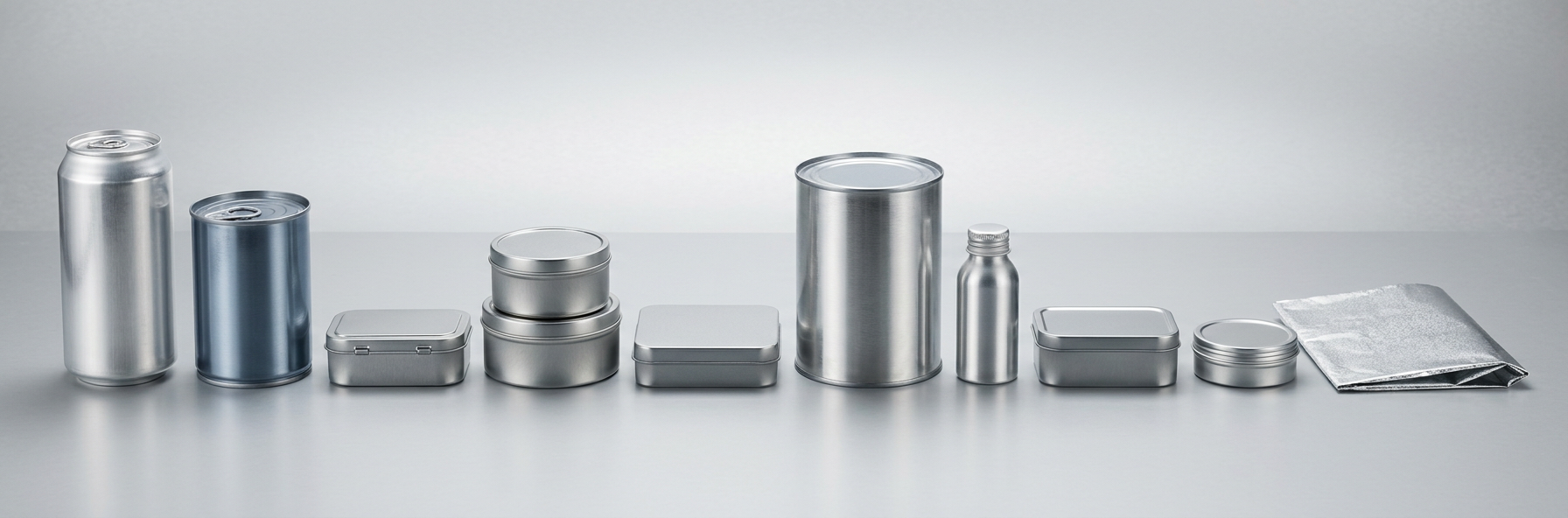
Typical Metal Packaging Formats

  • Beverage and food cans
  • Aerosol containers
  • Foil wraps and trays
  • Tins for specialty and gift products

Side by Side Comparison

FactorPaper PackagingPlastic PackagingMetal Packaging
Moisture ResistanceWeak unless coatedGenerally goodStrong
WeightLightLight to moderateHeavier
RecyclabilityWidely acceptedVaries by typeGenerally strong
PrintabilityStraightforwardRequires specific inks or filmsRequires specialized printing methods
Physical DurabilityModerateModerate to goodStrong
Typical Shelf Life SupportShort to moderateModerate to extendedExtended

Environmental Considerations Worth Understanding

Sustainability conversations around packaging rarely have a simple answer, and comparing these three materials makes that clear. Paper packaging often scores well on recyclability and renewable sourcing, assuming responsible forestry practices are followed, but its production process still involves water and energy use that should not be ignored. Plastic packaging can reduce overall material weight and food waste through effective barrier protection, yet its end-of-life outcomes depend heavily on regional recycling infrastructure and the specific plastic type used. Metal packaging supports repeated recycling with minimal quality loss, but its heavier weight and more energy-intensive production process carry their own environmental costs.

None of these materials is automatically the responsible choice in every situation. The right decision usually depends on the specific product, the expected shelf life, the transportation distance, and the recycling infrastructure available in the regions where the product will be sold.

How Industries Typically Choose Between These Materials

Different industries gravitate toward different materials based on what their products actually require.

Food and Beverage Many food brands mix and match depending on the product. Dry goods often use paper-based cartons or bags, shelf-stable liquids and sauces frequently use metal cans, and fresh or moisture-sensitive items often rely on plastic films or containers with tailored barrier properties.

Personal Care and Cosmetics Plastic remains common here due to its moldability and compatibility with liquid or gel formulations, though paper-based secondary packaging is increasingly used for outer boxes and inserts.

Industrial and Chemical Goods Metal containers are frequently chosen for products requiring strong protection against leakage, pressure, or reactivity with air, while plastic drums and containers serve products where weight reduction matters more than maximum durability.

Retail and E-Commerce Shipping Paper-based corrugated boxes dominate this space due to their combination of strength, light weight, and straightforward recyclability, though plastic mailers remain common for lightweight, non-fragile shipments.

A Practical Way to Decide Which Material Fits

Instead of asking which material is generally better, a more useful approach is asking a series of targeted questions about the specific product in question.

  1. Does the product need protection from moisture, oxygen, or light, and how sensitive is it to each?
  2. What shelf life does the product need to maintain in typical storage and retail conditions?
  3. How will the product be transported, and does weight meaningfully affect shipping cost?
  4. What recycling infrastructure exists in the primary markets where the product will be sold?
  5. Does the packaging need to support specific branding, printing, or shelf presentation requirements?

Working through these questions tends to reveal a clearer answer than simply defaulting to whatever material feels familiar or traditional for a given product category.

A Few Myths Worth Addressing

Myth: Plastic packaging is always worse for the environment than paper or metal. This depends heavily on the specific use case. In some situations, lightweight plastic packaging reduces transportation emissions and prevents food waste more effectively than heavier alternatives, even if its recycling rate is lower in certain regions.

Myth: Paper packaging can replace plastic in any application. Paper struggles significantly with moisture and grease resistance unless specially coated, which limits its use in many food and liquid applications without added treatment.

Myth: Metal packaging is only suitable for canned food. Metal packaging extends well beyond canned goods, showing up in aerosol products, specialty containers, and various industrial applications where strength and barrier protection matter more than weight.

As packaging regulations and consumer expectations continue evolving, all three material categories are seeing meaningful innovation. Paper-based solutions are improving barrier coatings to expand their use in moisture-sensitive applications. Plastic packaging is shifting toward simplified mono-material structures designed for easier recycling. Metal packaging continues benefiting from established recycling systems while exploring lighter-weight formats to reduce transportation impact.

Rather than one material eventually replacing the other two, the more likely outcome is continued coexistence, with each material serving the specific needs it handles well. Understanding those strengths and limitations, rather than treating any single material as a universal answer, remains the most practical way to make informed packaging decisions across any industry.

What Does Barrier Packaging Mean

What Does Barrier Packaging Mean

Anyone who has opened a bag of coffee and noticed the foil-like lining, or peeled back the lid on a snack pouch and heard that distinct crinkle, has already interacted with barrier packaging without necessarily knowing its name. The term sounds technical, almost clinical, but the idea behind it is simple enough that a five year old could grasp the basics after one good explanation. Barrier packaging refers to any packaging material or structure designed to slow down, block, or manage the movement of external elements such as moisture, oxygen, light, or odors, keeping them from reaching the product inside or, in some cases, keeping the product's own qualities from escaping outward.

That definition covers a lot of ground, and for good reason. Barrier packaging shows up everywhere from grocery store shelves to hospital supply rooms to electronics warehouses. It is not a single material or a single method. It is a category of packaging behavior, and understanding it means understanding what the packaging is actually trying to stop.

Breaking Down the Core Idea

At its heart, barrier packaging exists because most products are chemically or biologically sensitive to their surroundings. Food spoils when exposed to oxygen and moisture. Medications degrade when exposed to humidity or light. Electronic components can corrode when moisture creeps in during storage or shipping. Without some form of barrier, these products would have a much shorter usable life, and in some cases they could become unsafe.

The word "barrier" here does not always mean a total seal. In many real-world applications, barrier packaging is about managing the rate of exchange rather than eliminating it entirely. A package might be designed to slow moisture transfer to a level that keeps a product stable for months rather than days. This distinction matters because it shapes how packaging engineers choose materials and structures for different products.

Why Not Just Use Any Packaging?

A fair question to ask is why ordinary plastic wrap or paperboard cannot do this job. The short answer is that different materials have very different levels of permeability, meaning how easily gases, vapor, or light can pass through them. A single layer of plain plastic film might allow oxygen to pass through relatively quickly, which is fine for products that do not need long-term protection but poor for something like a vacuum-sealed meat product meant to stay fresh on a shelf for weeks.

This is where multi-layer structures come into play. Many barrier packaging solutions are not made from one material but from several thin layers laminated or co-extruded together, each layer contributing a different property. One layer might provide strength, another might block light, and another might specifically resist moisture or gas transfer.

The Main Types of Barriers

Barrier packaging is often discussed in terms of what it is actually blocking. Here is a general breakdown of the categories most commonly referenced across the packaging industry.

Barrier TypeWhat It Blocks or SlowsCommon Use Cases
Moisture BarrierWater vapor transferDry snacks, pharmaceuticals, electronics
Oxygen BarrierOxygen gas transferMeat, cheese, coffee, certain beverages
Light BarrierUV and visible light exposureLight-sensitive medications, oils, dairy
Aroma BarrierScent or flavor compound migrationCoffee, spices, flavored snacks
Grease BarrierOil and fat penetrationBakery items, fried foods, fast food wrapping

It is worth noting that a single package often needs to manage more than one of these factors at once. A bag of ground coffee, for example, typically needs both a moisture barrier and an aroma barrier, since coffee loses quality quickly when exposed to humid air and also releases its own aroma compounds if the packaging is not designed to hold them in.

Common Materials Behind the Function

Rather than naming specific commercial products, it helps to understand the general material categories that packaging designers work with when building barrier structures.

  • Metallized films: Thin films coated with a metallic layer, often used to block light and slow gas transfer.
  • Coated papers and boards: Paper-based substrates treated with coatings that add resistance to moisture or grease without losing recyclability in some formats.
  • Multi-layer laminates: Structures combining plastic, foil, or specialty polymers to achieve a specific combination of barrier properties.
  • High-barrier polymers: Certain polymer resins naturally resist gas transfer better than others, and these are often used as a core layer within a laminate rather than as a standalone material.

Choosing between these options usually comes down to a combination of cost, shelf life requirements, recyclability goals, and how the product will be filled, sealed, and transported.

Industries That Rely on This Kind of Packaging

Barrier packaging is not limited to one sector. It plays a role across a wide range of industries, and the specific requirements shift depending on what is being protected.

Food and Beverage

This is probably the most familiar territory for most consumers. Snack bags, coffee pouches, cheese wraps, and vacuum-sealed meats all depend heavily on barrier properties to maintain freshness and prevent spoilage during transport and shelf storage.

Pharmaceuticals

Medications are often sensitive to humidity, light, and oxygen. Blister packs and pouches used for tablets, capsules, and powders frequently rely on barrier films to keep the active ingredients stable until the point of use.

Electronics

Static-sensitive components and circuit boards can corrode or short out if exposed to moisture during storage or shipping. Barrier bags used in electronics packaging are designed to keep humidity levels low inside the sealed environment.

Industrial and Chemical Products

Certain chemicals, adhesives, and coatings degrade when exposed to air or moisture. Barrier packaging in this space often focuses on preventing curing, hardening, or unwanted chemical reactions before the product reaches its intended use.

How Barrier Performance Gets Measured

Packaging professionals typically evaluate barrier performance using a few standard measurements, even though the exact numbers are usually tailored to each specific product and application rather than treated as universal benchmarks.

  • Water Vapor Transmission Rate measures how much moisture passes through a material over a set period.
  • Oxygen Transmission Rate measures how much oxygen passes through under controlled conditions.
  • Light Transmission measures how much visible or ultraviolet light penetrates the packaging.

These measurements help packaging engineers compare materials and structures against the specific shelf life and stability goals for a given product, rather than relying on guesswork.

A Few Misconceptions Worth Clearing Up

There are some assumptions people make about barrier packaging that are worth addressing directly.

Misconception: All shiny or metallic-looking packaging has strong barrier properties. Appearance does not always match function. Some metallized-looking films are decorative rather than functional, so the actual barrier rating depends on the material composition, not the visual finish.

Misconception: Thicker packaging always means better barrier protection. Thickness plays a role, but the specific material and layer structure often matter more than overall thickness. A thin high-barrier laminate can outperform a thicker but less specialized material.

Misconception: Barrier packaging is only relevant for food. As covered earlier, pharmaceuticals, electronics, and industrial goods all depend on barrier properties just as much, sometimes with even stricter requirements.

What This Means for Buyers and Brands Sourcing Packaging

For anyone involved in sourcing packaging materials, whether for a food product, a medical device, or an industrial component, the starting point should always be the product's own sensitivities rather than the packaging's marketing appeal. Ask what the product reacts to first: moisture, light, oxygen, or a combination. From there, the right barrier structure becomes much easier to identify.

A short mental checklist can help guide this process:

  1. Identify what environmental factors threaten the product's stability or safety.
  2. Determine the required shelf life or storage duration.
  3. Consider transportation conditions, including humidity and temperature exposure.
  4. Balance barrier performance against sustainability goals and recyclability requirements.
  5. Test packaging performance under realistic storage and shipping conditions rather than relying solely on supplier claims.

As sustainability expectations continue to shape packaging decisions across many industries, there is ongoing interest in developing barrier solutions that maintain protective performance while improving recyclability or reducing material use. This is a genuinely difficult balance to strike, since many high-barrier materials historically relied on multi-material laminates that are harder to recycle through conventional systems. Ongoing research and material development continue to explore mono-material structures and coated paper alternatives that aim to preserve barrier function while simplifying end-of-life processing.

None of this suggests that barrier packaging is going away or becoming less relevant. If anything, as global supply chains grow longer and more complex, the need to protect products across extended transport and storage periods only becomes more pressing. Understanding what barrier packaging actually does, rather than treating it as an abstract industry term, gives buyers, brands, and everyday consumers a clearer sense of why so much thought goes into something as seemingly simple as a sealed bag or a coated wrapper.

Which Packaging Trends Are Shaping Manufacturing in 2026

Which Packaging Trends Are Shaping Manufacturing in 2026

Packaging Manufacturing Trends are changing the way factories think about materials, production planning, equipment, product design, and supply chains. The shift is not coming from one single development. Instead, several practical changes are happening at the same time.

Packaging buyers want products that fit their applications. Manufacturers are under pressure to manage material use and production costs. Regulations are influencing packaging design. At the factory level, automation and digital tools are becoming more useful. Meanwhile, customers are asking for packaging formats that can adapt to changing products, sales channels, and distribution conditions.

This creates a different manufacturing environment from the one many packaging companies were used to several years ago.

A packaging factory today may need to produce several formats for one customer, handle smaller production runs, change materials more carefully, collect more production information, and respond to new packaging requirements without creating unnecessary disruption.

So, which trends are actually shaping manufacturing this year?

1. Material Efficiency Is Becoming a Production Issue

Material efficiency has always mattered in packaging, but the discussion is becoming more detailed.

Manufacturers are looking at how much material a package uses, how efficiently that material can be converted, and whether the finished structure provides the protection required for its intended application.

Reducing material does not simply mean making a package thinner.

A lighter structure may behave differently during printing, cutting, folding, sealing, filling, stacking, or transportation. If a material change creates production instability, the expected benefit can become difficult to realize.

This is why packaging engineers are increasingly considering material efficiency together with manufacturing performance.

For example, a carton may be redesigned to use board more efficiently while retaining its required structure. A flexible package may be reviewed to determine whether different material combinations can provide suitable barrier or sealing performance. A transport package may be redesigned to reduce empty space without affecting product protection.

The important point is that material reduction is becoming part of production engineering rather than being treated as a simple purchasing decision.

2. Lightweight Packaging Is Influencing Design Decisions

Lightweight packaging continues to attract attention because it can affect material consumption, transportation, storage, and handling.

However, lightweighting creates a balancing exercise.

A package still needs to survive the conditions it will encounter. A shipping carton needs enough structural support for stacking and handling. A flexible package needs suitable resistance during filling and transportation. A protective package needs to perform its intended function.

That means manufacturers are increasingly looking at the entire package structure rather than one material characteristic.

Design teams may examine folds, corners, seams, reinforcement areas, package dimensions, and material distribution.

This can also affect machinery.

A new structure may require different cutting conditions or handling settings. A lighter material can respond differently to tension or feeding systems. Small changes in package construction can therefore create unexpected production issues if they are not tested carefully.

For this reason, lightweight packaging is becoming closely connected with manufacturing capability.

3. Automation Is Moving Into More Areas of the Factory

Automation is not a new idea in packaging manufacturing. What is changing is the range of tasks being considered for automation.

Packaging factories are looking at material handling, inspection, palletizing, production monitoring, changeovers, and other repetitive operations.

The reason is straightforward.

Factories need consistent processes, while many production environments also face challenges related to labor availability, training, and repetitive work.

Automation can help with certain tasks while allowing employees to focus on activities that require judgment, maintenance knowledge, process adjustment, or technical experience.

For packaging manufacturers, the practical question is not whether every operation should be automated.

It is where automation can remove unnecessary manual work without creating a more complicated production system.

A carton line, for example, may benefit from automated handling at the end of the process. A flexible packaging line may use automated inspection to identify repeated defects. A warehouse may use automated movement systems to organize finished goods.

The right application depends on the factory.

4. Digital Production Is Becoming More Relevant

Digital tools are gradually becoming part of everyday packaging manufacturing.

Production information can now be collected from different stages of a factory, allowing manufacturers to see how equipment is performing, where delays occur, and where quality problems appear repeatedly.

This changes the role of production data.

Instead of relying entirely on experience and manual records, manufacturers can combine operator knowledge with information collected during production.

For example, if a particular material repeatedly creates problems during one stage of converting, production records may help engineers identify the pattern.

If equipment downtime occurs repeatedly during a certain production change, historical information can help the team investigate the cause.

The goal is not to collect data simply because the technology is available.

Useful information should support an actual decision.

That makes digitalization more practical and easier to justify.

5. Digital Printing Supports Greater Production Variety

Packaging customers are not always looking for very large quantities of one identical format.

Product lines change. Seasonal packaging appears. Different markets may require different versions. Smaller product launches can create demand for shorter production runs.

This has created more interest in printing systems that can handle variation without requiring the same production approach used for large, standardized orders.

Digital printing can be useful in some of these situations because the workflow can support greater variation between jobs.

For manufacturers, this can influence inventory planning.

If printed packaging can be produced closer to the actual requirement, companies may have more flexibility when designs or product information change.

It can also make smaller production quantities easier to consider.

However, digital printing is not a universal replacement for conventional printing.

The appropriate method depends on the packaging format, production volume, material, print requirements, and customer expectations.

The broader trend is flexibility.

6. Shorter Production Runs Are Changing Factory Planning

Many packaging manufacturers are dealing with greater product variation.

One customer may require several package sizes. Another may need different designs for different markets. A third may order smaller batches because its own product portfolio is changing.

This creates more frequent production changes.

A factory designed around long production runs needs a different approach from one handling frequent changeovers.

Manufacturers are therefore examining:

  • Production scheduling
  • Material preparation
  • Machine setup
  • Changeover procedures
  • Quality checks
  • Inventory planning
  • Order grouping
  • Equipment flexibility

The goal is to make smaller or varied orders practical without allowing changeovers and preparation work to consume too much production time.

This is one reason flexible manufacturing is becoming increasingly relevant to packaging production.

7. Packaging Design and Manufacturing Are Moving Closer Together

Packaging design used to be treated primarily as a product development task.

Today, manufacturing considerations often enter the discussion much earlier.

A package may look attractive on a design screen but create problems on the production line.

A complicated shape can require additional forming steps. A particular material combination may be difficult to convert consistently. A new closure may not work smoothly with existing filling equipment.

These issues are easier to manage when manufacturing teams become involved early.

A useful packaging development process may therefore bring together:

AreaMain Consideration
DesignFunction, appearance, structure, and usability
MaterialsAvailability, performance, and process compatibility
ProductionEquipment capability and manufacturing stability
LogisticsStorage, handling, stacking, and transportation
ComplianceMarket-specific packaging requirements
End of useRecovery, reuse, or disposal considerations

This broader approach can prevent a design from being developed without enough attention to how it will actually be produced.

8. Flexible Packaging Is Becoming More Process Focused

Flexible packaging continues to develop across food, household, personal care, agricultural, industrial, and other applications.

From the outside, a flexible package can look relatively simple.

The manufacturing process may be anything but simple.

Film selection, coating, printing, laminating, slitting, forming, and sealing can all affect the final package.

A change in one layer can influence another stage of production.

This is why flexible packaging manufacturers are paying close attention to process stability.

A package may need to provide suitable barrier properties while also running consistently through converting and filling operations.

Customers may also request changes in appearance, package size, opening behavior, or sealing performance.

The result is a manufacturing environment where material knowledge and equipment knowledge need to work together.

9. Circular Packaging Is Affecting Production Decisions

Circularity is becoming part of the packaging conversation, but the concept needs to be considered carefully.

A package does not become part of a circular system simply because a material is described as recyclable or reusable.

The surrounding system matters.

Collection, sorting, processing, infrastructure, material compatibility, and local requirements can all influence what happens after use.

For manufacturers, this means packaging development increasingly needs to consider the later stages of a product's life.

That can influence material combinations, coatings, labels, closures, package structures, and production methods.

Manufacturers may also receive more questions from customers about material composition and recovery pathways.

Clear technical information becomes useful here.

Rather than making broad environmental statements, companies can provide specific information about the materials and structures used in a package.

This gives buyers something practical to evaluate.

10. Regulatory Requirements Are Entering Earlier Design Discussions

Packaging regulations can affect manufacturing in several ways.

Requirements concerning materials, labeling, recycling information, packaging waste, and environmental claims may influence product development before production begins.

This means regulatory preparation is increasingly connected with engineering.

If a customer intends to sell packaging in several markets, the manufacturer may need to understand whether the same structure and labeling approach can be used across those markets.

Sometimes the answer is yes.

Sometimes changes are necessary.

The earlier these questions are considered, the easier it can be to avoid unnecessary redesign work later.

For manufacturers, this also creates a stronger connection between sales, technical teams, quality departments, and production planners.

An international packaging order is no longer only about quantity and delivery date.

It can involve material information, labeling requirements, documentation, and market-specific considerations.

11. Quality Inspection Is Becoming More Connected With Production

Quality control is moving closer to the production process.

Instead of finding problems only after a production batch is finished, manufacturers increasingly want to identify issues while production is taking place.

Depending on the packaging type, inspection may involve dimensions, print appearance, sealing, structural characteristics, surface conditions, or other application-specific properties.

Automated inspection can help identify repeated defects, while human inspection remains important for situations requiring judgment and context.

The combination can provide a more useful quality process.

For packaging factories, this matters because quality problems can become expensive when discovered late.

If a problem is identified early, the production team may have an opportunity to correct the process before a larger quantity is affected.

This is where production monitoring and quality control begin to overlap.

12. Supply Chain Flexibility Is Becoming More Important

Packaging manufacturers depend on materials, equipment, spare parts, transportation, and customer forecasts.

A disruption in one area can affect the rest of the production process.

This has encouraged manufacturers to think more carefully about supply chain flexibility.

Possible approaches include maintaining relationships with multiple qualified material suppliers, reviewing alternative materials, improving inventory planning, and keeping better communication with customers.

The purpose is not necessarily to hold large quantities of everything.

Too much inventory can create its own problems.

Instead, manufacturers need to understand which materials and components are difficult to replace and which alternatives are realistically available.

This information can help companies prepare for unexpected changes.

13. Production Resilience Is Becoming a Practical Goal

Resilience sounds like a broad business concept, but on the factory floor it can mean something very simple.

Can the production system continue when conditions change?

A resilient packaging operation may be able to switch between approved materials, adjust production schedules, handle different formats, or respond to changes in customer demand.

Equipment flexibility plays a role.

So does employee knowledge.

Documentation also matters.

If only one person knows how to manage a particular production issue, the factory can become vulnerable when that person is unavailable.

Knowledge sharing and clear production procedures therefore have an important place in modern packaging manufacturing.

14. Packaging Manufacturers Are Paying More Attention to Total Efficiency

Efficiency is not simply about producing more units in less time.

A production line can run quickly while generating excessive waste, frequent quality problems, difficult changeovers, or high maintenance requirements.

A more useful view considers the complete production process.

Manufacturers may examine:

  • Material utilization
  • Production downtime
  • Changeover work
  • Scrap generation
  • Quality issues
  • Energy use
  • Equipment maintenance
  • Warehouse movement
  • Packaging and shipping efficiency

These factors are connected.

Reducing material waste can improve both resource use and production costs.

Better scheduling can reduce unnecessary machine changes.

More consistent quality can reduce rework.

Better package dimensions can improve warehouse and transportation efficiency.

The trend is therefore moving toward total process evaluation rather than focusing on one production metric.

15. E-Commerce Continues to Influence Packaging Production

E-commerce has changed the way many products move through distribution networks.

A package designed for a retail shelf may not face the same handling conditions as a package traveling through a parcel delivery network.

This can influence box structure, protective materials, package dimensions, opening methods, and sealing.

Manufacturers therefore need to consider how packaging behaves outside the factory.

A package may be handled several times before reaching its final destination.

It may be stored in different orientations, placed alongside other products, or exposed to different transportation conditions.

This makes practical package testing increasingly important.

The trend is not simply about making packaging suitable for online sales.

It is about understanding the complete journey from production to end user.

16. Customization Is Becoming Easier to Manage

Packaging customization once created considerable production complexity.

Today, flexible production systems can make certain forms of customization easier to manage.

Customers may request different sizes, colors, structures, or printed information.

Manufacturers can respond by combining standardized production elements with controlled variations.

This is an important distinction.

Customization does not always require creating a completely new production process.

A manufacturer may use an existing material platform and adjust selected features for different applications.

This can provide customers with more choice while allowing the factory to retain some production consistency.

The challenge is knowing where customization creates useful value and where it creates unnecessary complexity.

17. What Should Packaging Manufacturers Watch Closely?

The trends shaping packaging manufacturing this year are connected by one idea: adaptability.

Materials are changing.

Production systems are becoming more flexible.

Automation is expanding.

Digital tools are becoming more useful.

Regulatory requirements are influencing design.

Customers are asking for more variation.

Supply chains need greater flexibility.

None of these changes means that every factory needs to replace its existing equipment or completely redesign its business model.

In many cases, the more practical approach is to identify where a small improvement can solve a real production problem.

A manufacturer can start by asking:

  1. Which production stage creates the most unnecessary waste?
  2. Which packaging formats require frequent changeovers?
  3. Which materials create recurring production problems?
  4. Where could better inspection prevent repeated defects?
  5. Which customer requirements are changing most often?
  6. Which production information is currently difficult to track?
  7. Which packaging designs could be simplified?
  8. Which supply chain dependencies need an alternative?

These questions can reveal where current trends are actually relevant to a specific factory.

What Will Packaging Manufacturing Look Like Next?

Packaging manufacturing is unlikely to move toward one single production model.

Different factories will make different choices depending on their products, equipment, customers, materials, and markets.

Some will invest in automation.

Others may focus on flexible printing.

Some will redesign packaging structures to use materials more efficiently.

Others may concentrate on supply chain planning, quality control, or regulatory preparation.

The common direction is a move toward manufacturing systems that can respond to change without creating unnecessary complexity.

That is perhaps the most useful way to understand packaging trends in 2026.

The industry is not simply looking for new materials or new machines.

Manufacturers are examining how design, materials, production, data, logistics, quality, and end-of-use considerations fit together.

For packaging companies, the practical challenge is to decide which changes genuinely improve their operations and which ones are simply temporary market noise.

The factories that understand their own production requirements clearly will be in a better position to decide where new technologies, materials, and processes make sense.

And that makes this year's packaging trends less about chasing something new and more about building a production system that can keep adapting as customer requirements, materials, regulations, and supply chains continue to change.

How Are Regional Packaging Companies Entering International Markets

How Are Regional Packaging Companies Entering International Markets

Regional Packaging Companies are no longer limited to serving buyers within a nearby industrial area or domestic market. Changes in sourcing, e-commerce, manufacturing networks, and logistics have created more opportunities for packaging manufacturers to work with customers in other countries. At the same time, international expansion is not simply a matter of finding an overseas buyer and arranging shipment. Packaging products must fit the destination market, supply chain, regulations, customer expectations, and commercial requirements.

For a regional packaging manufacturer, moving into international trade is therefore a gradual business process. It may begin with a small number of export orders, a distributor relationship, contract manufacturing work, or enquiries from overseas buyers. From there, the company can learn which products travel well, which markets are practical to serve, and where additional preparation is required.

The interesting question is not whether a regional manufacturer can sell abroad. It is how the company builds a workable international operation without losing control of production, service, quality, or cost.

Starting With a Specific Market Instead of the Whole World

International expansion can become complicated when a company tries to target too many countries at once.

A more practical approach is to identify a small group of potential markets and compare them against the company's existing capabilities. Packaging demand can vary considerably between countries because industries, distribution systems, regulations, material availability, and purchasing habits are different.

For example, a manufacturer specializing in transport packaging may look at markets with strong manufacturing activity. A company producing flexible packaging may instead examine food processing, household products, agriculture, or consumer goods industries in selected regions.

Several questions can help narrow the field:

  • Which industries already purchase similar packaging products?
  • Can the company supply the required material types?
  • Is international transportation commercially practical?
  • Are local packaging requirements understood?
  • Does the company have experience with export documentation?
  • Can customer service be provided across different time zones?
  • Would local distribution be necessary?

These questions turn international expansion from a broad ambition into a manageable market selection exercise.

Understanding What Changes From One Market to Another

A packaging product that works in one market does not automatically need to be redesigned for another, but assumptions should not be carried across borders without checking.

Packaging can be affected by product category, transportation conditions, recycling systems, labeling rules, import requirements, and customer specifications. A box used for domestic distribution may encounter different handling conditions during an international journey. A flexible package may need different material considerations depending on its application and destination.

This is why international customers often ask for more than a product catalogue.

They may want information about material composition, intended application, production consistency, packaging dimensions, documentation, packing methods, and shipping arrangements. Some buyers may also have internal sustainability requirements or procurement procedures that influence supplier selection.

Regional manufacturers entering overseas markets need to be prepared for this wider information exchange.

Product Adaptation Does Not Always Mean Creating a New Product

International expansion is sometimes described as product localization. In packaging, that does not necessarily mean developing an entirely different product for every country.

Adaptation can be relatively practical.

A manufacturer may adjust packaging structure, printing requirements, closure methods, packing configurations, material combinations, or outer shipping protection according to the customer's application.

The same production capability may support several market variations if the manufacturing process is flexible enough.

This can be particularly useful for regional manufacturers because international expansion does not always require a complete change to the factory. Instead, the company can identify which existing capabilities can serve new applications and then determine where modifications are commercially reasonable.

The key is to avoid unnecessary customization.

Every additional variation can increase purchasing complexity, production planning requirements, inventory management work, and inspection needs. A sensible international product strategy therefore balances customer requirements with manufacturing practicality.

Compliance Becomes Part of Market Entry

Packaging Compliance Preparation

Packaging companies entering international markets also need to understand that compliance is not a single checklist.

Requirements can differ according to the destination, packaging material, application, product category, labeling system, waste-management framework, and customer industry.

Environmental requirements have also become an important part of packaging discussions. Different markets are developing their own approaches to recyclability, material use, producer responsibility, labeling, and packaging waste.

This creates a practical challenge for regional manufacturers.

A company does not need to become an expert in every international regulation before accepting its first overseas enquiry. However, it should establish a process for checking the requirements relevant to each target market.

That process may include:

AreaQuestions to Consider
MaterialsAre the proposed materials appropriate for the application and destination market?
LabelingDoes the customer require specific information or formats?
RecyclingHow is the packaging handled after use in the target market?
DocumentationWhat technical and commercial documents are needed?
Product useAre there industry-specific requirements?
ShippingDoes the packaging remain suitable throughout international transportation?

The important point is that compliance should be considered during product planning rather than after production has already started.

Building an Export-Ready Production Process

A manufacturer can have a suitable product and still struggle with international orders if its internal process is not prepared.

Domestic orders may rely on established communication routines. International orders often involve more documentation, longer transportation periods, different payment arrangements, and additional coordination between production and logistics.

Export readiness therefore involves more than a sales department.

Production teams need clear specifications. Quality teams need consistent inspection procedures. Packaging teams need suitable outer protection for shipment. Logistics staff need accurate cargo information. Sales teams need to communicate clearly with buyers across different time zones.

The objective is to create a repeatable process.

A single successful overseas shipment is useful, but a repeatable workflow is what allows international business to become part of normal operations.

Using Overseas Distributors and Local Partners

Not every regional packaging company needs to establish its own overseas warehouse or sales office.

Local distributors, agents, packaging converters, logistics partners, and industry contacts can provide access to customers without requiring the manufacturer to build an entire foreign operation immediately.

A local partner may understand purchasing habits, language, business customs, transportation networks, and customer expectations more clearly than a manufacturer located thousands of kilometers away.

However, partnerships need careful evaluation.

A manufacturer should understand how the partner reaches customers, which industries it serves, how technical questions are handled, how quotations are managed, and whether after-sales communication is reliable.

The relationship should also have clear boundaries.

Pricing responsibilities, territory, customer ownership, product information, sample handling, technical support, and communication procedures are all worth discussing before the relationship becomes active.

Logistics Can Shape the Commercial Model

Packaging products are often relatively bulky compared with their selling value. This makes logistics an important part of international market planning.

A product may appear commercially attractive when viewed only from its factory price. Once transportation, handling, storage, insurance, import procedures, and local distribution are considered, the commercial picture can change.

This does not mean that international shipping is unsuitable for regional manufacturers. It means logistics needs to be included in the calculation from the beginning.

Some companies may focus on products that can be packed efficiently. Others may work with local converters or distributors to reduce unnecessary transportation of finished goods.

The right approach depends on the packaging category and customer requirements.

International expansion is therefore closely connected with supply chain design.

Digital Channels Are Changing How Overseas Buyers Find Suppliers

Traditional trade relationships remain important, but digital channels have changed the early stages of supplier discovery.

A purchasing manager can now research packaging manufacturers, compare product categories, review technical information, and contact suppliers without visiting a factory.

This makes a company's digital presence part of international market development.

A useful website should explain what the manufacturer actually produces, which applications it serves, what customization options are available, and how potential buyers can start a technical discussion.

Content can also help.

Articles about packaging materials, manufacturing processes, application considerations, shipping preparation, packaging regulations, and industry trends can answer questions before a buyer sends an enquiry.

For international audiences, clarity matters more than complicated language.

A buyer who cannot quickly understand the product, application, production capability, and contact process may simply move to another supplier.

Technical Content Can Support International Sales

Regional packaging manufacturers sometimes treat content marketing as separate from sales. In practice, the two can work together.

A useful technical article can attract a buyer who is still researching a packaging problem. A product page can then provide information about possible solutions. A clear enquiry process can move that visitor into a commercial conversation.

This approach is especially relevant for B2B packaging because purchasing decisions may involve several people.

An engineer may care about material and structure.

A purchasing manager may focus on supply continuity and commercial terms.

A logistics manager may be concerned about packing and transportation.

A sustainability team may examine material recovery or environmental requirements.

Content that addresses these different questions can make the initial supplier evaluation easier.

International Customers Often Expect More Communication

Cross-border business creates a larger communication gap than domestic sales.

A customer may ask for samples, technical documents, production updates, packing photographs, inspection information, or shipment details. Delays in communication can become more noticeable when the buyer and supplier operate in different time zones.

For this reason, communication should be treated as part of the export process.

Simple practices can help:

  • Confirm technical specifications in writing.
  • Keep product terminology consistent.
  • Separate confirmed requirements from suggestions.
  • Provide clear sample information.
  • Record approved changes.
  • Explain production and shipment stages.
  • Respond to technical questions with specific information.

Good communication does not require complicated language. In many cases, short and precise explanations reduce misunderstandings.

Sustainability Expectations Are Becoming More Market Specific

Sustainability is frequently discussed as a global packaging issue, but the practical requirements are often regional.

Collection systems, recycling infrastructure, legislation, consumer expectations, and customer procurement policies vary between markets. A packaging structure considered practical in one region may require additional evaluation elsewhere.

For regional manufacturers, this creates an opportunity to make sustainability information more useful.

Instead of relying on broad environmental claims, companies can provide clear information about material choices, recyclability considerations, sourcing documentation where applicable, and intended disposal routes.

This approach is easier for buyers to evaluate and can reduce ambiguity during supplier discussions.

It also helps manufacturers avoid making claims that cannot be supported by product documentation.

Quality Systems Matter More as Export Volumes Grow

A small export order can sometimes be managed through direct communication between a buyer and a sales representative.

As order volume increases, that approach becomes harder to maintain.

International customers may expect consistent product characteristics from one shipment to another. A manufacturer therefore needs production records, inspection procedures, sample approval processes, and change-control practices that can support repeat orders.

This does not mean every regional company needs a complicated management structure.

The objective is simply to make important information traceable.

When a customer asks why a particular packaging specification changed, the manufacturer should be able to identify what happened and communicate the reason clearly.

That level of control becomes increasingly important when customers are located far away.

What Regional Packaging Companies Can Learn From Early Export Orders

The first international orders should not only be viewed as sales.

They are also market research.

A manufacturer can learn which product descriptions generate enquiries, which specifications create confusion, which shipping methods work smoothly, and which questions repeatedly appear during negotiations.

Customer feedback can reveal whether a product needs adaptation.

Logistics experience can reveal whether the packing method needs adjustment.

Sales conversations can show whether the website provides enough technical information.

In this way, early international business can help improve the entire export process.

Instead of treating every order as an isolated transaction, companies can use accumulated experience to build a more reliable international sales model.

A Practical Path From Regional Supplier to International Seller

There is no single route that every packaging manufacturer needs to follow.

A practical sequence may look like this:

Step 1: Review existing capabilities

Identify the packaging products, materials, equipment, applications, and production processes that are already commercially viable.

Step 2: Select a manageable group of markets

Compare customer demand, logistics, regulations, competition, and internal capabilities.

Step 3: Prepare technical information

Create clear product descriptions, application information, material details, packaging methods, and supporting documentation.

Step 4: Test market interest

Use digital enquiries, distributors, industry contacts, exhibitions, and direct business development to identify potential customers.

Step 5: Review sample and trial orders

Pay attention to technical questions, transportation conditions, customer feedback, and production issues.

Step 6: Improve the export workflow

Turn lessons from early orders into clearer internal procedures.

Step 7: Expand carefully

Once a market and product combination becomes repeatable, consider adding customers, distributors, applications, or nearby markets.

This staged approach can help a regional manufacturer avoid taking on unnecessary operational complexity too early.

International Expansion Is Also a Supply Chain Decision

For packaging companies, internationalization is not simply a sales strategy.

It can influence sourcing, production planning, inventory, warehousing, logistics, quality control, customer service, and product development.

That is why market expansion works better when different departments are involved early.

A sales team may identify a promising customer, but production needs to confirm whether the specification is practical. Logistics needs to evaluate transportation. Quality teams need to consider inspection requirements. Management needs to assess whether the commercial opportunity fits the company's wider capacity.

When these factors are considered together, international expansion becomes easier to manage.

Where the Opportunity May Develop Next

The packaging industry is becoming more connected across regions, but it is not becoming identical everywhere.

Regional differences will continue to influence material selection, product design, sustainability expectations, logistics models, and purchasing decisions. At the same time, international buyers are becoming more comfortable communicating with manufacturers outside their own markets.

This creates room for regional packaging producers with clear products, practical export processes, responsive communication, and the ability to adapt to customer requirements.

The companies that approach international markets carefully may find that expansion does not require abandoning their regional manufacturing identity. Their existing production knowledge can become the foundation for serving a wider customer base.

The process begins with understanding where the company's capabilities fit, then building the commercial, technical, and logistical systems needed to support that opportunity.

For Regional Packaging Companies, international growth is therefore less about simply shipping products farther away and more about learning how to make regional manufacturing work within a wider packaging supply chain.

How Is Digital Transformation Changing Packaging Production

How Is Digital Transformation Changing Packaging Production

Digital Transformation In Packaging Production is changing the way packaging factories collect information, operate machinery, manage quality, and respond to production problems. What once depended heavily on isolated machines, manual records, and periodic checks is gradually moving toward connected equipment, shared production data, automated monitoring, and more coordinated workflows.

The change is not simply about installing new software. In a packaging plant, digital transformation can involve machinery, sensors, control systems, production management tools, inspection equipment, maintenance processes, and data platforms working together. The purpose is to create a clearer picture of what is happening on the production floor and make that information easier to use.

This matters because packaging production often involves frequent product changes, multiple machine stages, strict quality requirements, material management, and pressure to respond to changing orders. A disconnected production environment can make it difficult to understand where a delay begins or why a particular problem keeps returning.

Digital tools do not remove those challenges by themselves. Instead, they provide manufacturers with additional ways to observe processes, organize information, and make operational decisions.

From Individual Machines To Connected Production

Traditional packaging lines can contain many machines that perform separate tasks. One machine may form a package, another may fill it, another may seal it, and additional equipment may inspect, label, code, or pack the finished product.

Each machine can operate correctly while the overall line still lacks a shared view of production.

Digital transformation changes this relationship by connecting equipment and information.

When production equipment can exchange relevant data, manufacturers can build a more complete picture of the line. Machine status, production events, quality information, maintenance conditions, and material-related information can become part of a connected workflow.

The value comes from the connection itself.

A machine that reports a stop condition is useful. A production system that can place that event alongside other machine conditions, production schedules, and quality information becomes more useful for decision-making.

This is one reason connected manufacturing has become an important part of packaging industry development.

Production Data Is Becoming A Working Tool

Packaging machinery generates a large amount of operational information.

Depending on the equipment and process, this may include machine status, production counts, cycle information, alarm events, inspection results, material usage, and maintenance-related observations.

In a conventional workflow, some of this information may remain inside individual machines or be recorded manually. Digital systems can make it easier to collect and organize the information.

The important change is not simply having more data.

It is making data available in a form that people can understand and use.

For example, a production manager may want to understand why a line has experienced repeated interruptions. An engineer may need to investigate a recurring machine condition. A quality team may want to compare inspection results across production batches. A maintenance team may need to identify equipment that requires attention.

The same production data can support each of these activities when it is collected and organized appropriately.

This turns production information from a passive record into part of the daily operating process.

Real-Time Visibility Changes How Problems Are Found

A production problem is easier to investigate when the people responsible can see what happened.

Digital monitoring can provide visibility into equipment status and production events while the line is operating. Instead of waiting for a shift report or manually collecting information after an interruption, teams can review available information closer to the time of the event.

This can change the way troubleshooting is approached.

Imagine a packaging line experiencing repeated stops. Without connected monitoring, the team may need to rely on operator observations and manual records. With a connected system, engineers may be able to review machine events, equipment status, and related production information together.

That does not automatically identify the cause. However, it can reduce the amount of guesswork involved in the investigation.

Real-time visibility is therefore less about creating a large dashboard and more about putting useful information in the right hands at the right time.

Automation Is Becoming More Connected

Automation has been part of packaging production for years. The newer development is the increasing connection between automated equipment and digital production systems.

Packaging machines can perform repetitive operations with limited manual intervention. Sensors can monitor physical conditions. Inspection equipment can identify process variations. Controllers can coordinate machine functions. Digital systems can then collect information from these activities.

This creates a production environment in which physical automation and digital information work together.

For manufacturers, this can support several practical goals:

  • More consistent process monitoring
  • Easier production reporting
  • Faster access to machine information
  • Better coordination between equipment
  • More structured maintenance records
  • Improved production planning
  • Clearer traceability

The key is integration. Automation that remains isolated from the rest of the factory does not provide the same level of visibility as equipment that can participate in a connected production workflow.

Quality Control Is Becoming More Data Driven

Quality control is another area affected by digital transformation.

Packaging quality can depend on many factors, including material handling, machine settings, sealing conditions, filling processes, labeling, coding, and physical package appearance.

Manual inspection still has a role in many operations. However, automated inspection systems can monitor specific characteristics continuously during production.

Machine vision, sensors, scanners, and inspection devices can collect information at different stages of the line. When this information is connected to production records, manufacturers can gain a clearer understanding of when and where quality issues occur.

For example, if a recurring packaging defect appears, historical production information may help the engineering team compare the affected period with equipment conditions or process events.

This does not mean that digital inspection eliminates human judgment. Instead, it provides another source of evidence for quality teams.

The result is a shift from simply identifying defective products toward understanding the production conditions associated with quality variation.

Maintenance Is Moving Toward Earlier Intervention

Maintenance is another area where connected production data can change established practices.

A traditional maintenance approach may rely on scheduled inspections, operator observations, or repairs after a failure occurs. Digital monitoring adds another possibility: observing equipment condition over time and identifying unusual patterns.

Sensors can collect information related to machine operation, while software can organize historical records and highlight changes that deserve investigation.

This is the foundation of condition-based and predictive maintenance approaches.

The concept is relatively straightforward. If a machine begins behaving differently from its normal operating pattern, maintenance personnel may have an opportunity to investigate before the issue becomes a larger production interruption.

However, digital maintenance still depends on good engineering practices.

Sensors need to be installed appropriately. Data needs to be interpreted correctly. Maintenance teams need clear procedures for responding to identified conditions.

Technology can provide information, but people still need to decide what action is appropriate.

Production Planning Can Become More Flexible

Packaging factories often deal with changing orders, different product formats, material availability, and production priorities.

Digital production systems can bring more information into the planning process.

Instead of relying entirely on separate spreadsheets, paper records, or isolated machine information, planners can work with production data that reflects actual operating conditions.

This can help teams understand:

  • Current production status
  • Equipment availability
  • Production progress
  • Material requirements
  • Planned changeovers
  • Quality-related interruptions
  • Maintenance activities

The benefit is not that every production plan becomes automatic.

Rather, planners have more information when making decisions.

That distinction matters. Digital transformation should support practical decision-making instead of creating another layer of software that employees must manage without a clear operational purpose.

Traceability Is Becoming More Structured

Traceability has become increasingly important across packaging operations.

Manufacturers may need to understand where materials came from, which production process was used, when an item was produced, and how finished goods moved through the facility.

Digital systems can connect production events with relevant records.

For example, a manufacturing record may contain information about the production order, equipment used, inspection events, and packaging stage. When these records are linked correctly, tracing a production event can become more structured.

Traceability is particularly useful when an investigation is required.

Instead of searching through disconnected records, teams can work from a more organized production history.

The quality of traceability still depends on data accuracy. A digital record is only useful when the information entering the system is reliable and the relationship between different records is clear.

Digital Integration Connects Factory And Management Systems

One of the larger changes in modern manufacturing is the connection between shop-floor systems and higher-level business systems.

Packaging equipment generates operational information. Production management systems organize manufacturing activities. Enterprise systems may handle orders, inventory, purchasing, and other business processes.

When these layers remain separate, information may need to be transferred manually.

Digital integration creates opportunities for information to move between them.

A production order can inform manufacturing planning. Production status can be returned to management systems. Inventory information can support production decisions. Quality records can become part of a broader manufacturing history.

The exact architecture varies from one factory to another, but the general direction is clear: packaging production is becoming less isolated from the wider organization.

Artificial Intelligence Has A Supporting Role

Artificial intelligence is also entering packaging production, particularly in areas involving inspection, data analysis, maintenance, planning, and process optimization.

However, AI should not be treated as a replacement for the basic digital infrastructure.

Reliable data comes first.

If machines are poorly connected, production records are incomplete, and process information is inconsistent, adding an AI application does not automatically solve the underlying problem.

A practical digital transformation strategy usually begins with foundational capabilities such as:

  1. Connected equipment
  2. Reliable data collection
  3. Clear production records
  4. Integrated workflows
  5. Appropriate analytics
  6. Well-defined operational processes

AI can then be applied where it has a clear use case.

For packaging production, that may include identifying visual defects, recognizing unusual machine behavior, analyzing production patterns, or helping teams review large amounts of operational information.

The useful question is not whether a factory uses AI. It is whether the technology addresses a real production problem.

Digital Transformation Also Changes The Workforce

Technology changes the work performed by operators, engineers, maintenance personnel, and production managers.

Operators may spend less time recording routine information and more time responding to system alerts or managing equipment. Maintenance personnel may work with diagnostic information that was previously unavailable. Engineers may spend more time analyzing production data and integrating systems.

This means digital transformation requires changes in skills as well as equipment.

Training should cover more than button operation. Employees may need to understand data interpretation, system relationships, basic network concepts, troubleshooting workflows, and cybersecurity practices.

Knowledge sharing is also important.

If only one person understands a digital production system, the organization may create a new operational dependency. Documentation and internal training can help distribute knowledge across the team.

Cybersecurity Becomes Part Of Packaging Production

More connectivity creates more communication pathways.

That makes cybersecurity an important part of digital transformation.

Packaging machinery that was once isolated may now communicate with production networks, monitoring systems, maintenance tools, or business applications. Each connection should therefore be considered from a security perspective.

Practical measures can include controlled access, network segmentation, account management, secure remote access, software maintenance, backups, and monitoring of unusual activity.

Security should also be considered during system design.

Adding security controls after a production environment has already become highly connected can be more difficult than incorporating them into the architecture from the beginning.

The goal is not to make the system unnecessarily complicated. It is to make connectivity manageable and appropriate for the operational environment.

Sustainability Can Benefit From Better Production Information

Digital transformation can also support resource management.

Packaging production uses materials, energy, equipment, and other resources. When manufacturers can see production information more clearly, they may be better positioned to identify unnecessary waste, repeated interruptions, inefficient changeovers, or process conditions that deserve attention.

For example, production records can help teams compare material usage with planned output. Equipment data can help identify periods of unnecessary operation. Process monitoring can help locate recurring sources of defective packaging.

Digitalization does not automatically make production sustainable.

It provides information that can support more informed decisions.

That distinction is important because sustainability improvements still depend on engineering changes, material choices, equipment design, production practices, and business priorities.

The Challenge Is Integration, Not Just Technology

Digital transformation can sound complicated because it involves many technologies at once.

In practice, the difficult part is often making those technologies work together.

A factory may already have controllers, sensors, inspection systems, production software, databases, and business systems. Replacing everything at once may not be practical or necessary.

A phased approach can make more sense.

A manufacturer might begin by improving data collection on one production line. The next stage could connect equipment monitoring with maintenance workflows. Later, production data could be integrated with planning or enterprise systems.

This approach allows teams to learn from each stage before expanding the digital architecture.

It also reduces the risk of investing in technology without understanding how it will be used.

What Should Packaging Manufacturers Consider Before Digitalizing?

Before starting a digital transformation project, manufacturers should ask several practical questions.

AreaQuestions To Ask
ProductionWhich processes create the greatest information gaps?
EquipmentWhich machines can provide useful operational data?
DataWhat information is already available?
IntegrationWhich systems need to exchange information?
QualityWhich inspection processes could benefit from digital records?
MaintenanceWhich equipment conditions should be monitored?
PlanningWhere does manual production information create delays?
WorkforceWhat skills will employees need?
SecurityHow should connected equipment be protected?
ExpansionCan the digital architecture support future changes?

These questions help keep the project focused on production needs.

Digital transformation does not have to mean replacing every existing machine. In many cases, the practical path involves connecting existing equipment, improving information flows, and introducing new digital functions where they solve specific problems.

Where Is Packaging Production Heading?

The direction of packaging production is increasingly connected, data-aware, and integrated.

Manufacturers are exploring connected machinery, automated inspection, condition monitoring, digital planning, production analytics, and other technologies that can help teams understand factory operations in greater detail. Recent packaging industry discussions also place strong attention on digital tools, automation, machine data, and production visibility.

But digital transformation should not be viewed as a race to install every available technology.

A packaging factory has its own machines, products, workflows, workforce, maintenance practices, and production goals. The useful digital strategy is the one that fits those conditions.

Some manufacturers may gain value from better machine monitoring. Others may need stronger traceability, improved inspection data, integrated planning, or more structured maintenance information.

The path can look different from one production environment to another.

Digital transformation is changing packaging production by connecting physical equipment with information systems and making production data more useful across the factory.

The shift affects more than machinery. It reaches quality control, maintenance, planning, traceability, workforce skills, cybersecurity, and resource management.

The biggest change may be the way production problems are understood. Instead of relying only on manual observation and isolated records, teams can increasingly combine equipment information, production history, inspection results, and operational data when making decisions.

That does not remove the need for experienced people. In fact, it makes engineering knowledge, maintenance experience, and process understanding even more valuable because digital systems provide information that people must interpret.

For packaging manufacturers, the practical question is therefore not simply whether digital technology should be adopted. It is where digital connectivity can solve a genuine production problem, improve information flow, or make an existing workflow easier to understand and manage.

When technology is introduced around real production needs, digital transformation becomes less about chasing new tools and more about building a packaging operation that can observe, analyze, and respond to changing conditions with greater clarity.