Category Archives: Material Guides

Compare packaging materials, understand performance characteristics, and review suitable options for different packaging requirements.

Why Does Mono Material Packaging Need Barrier Layers

Why Does Mono Material Packaging Need Barrier Layers

Mono material packaging is designed around one main type of polymer, with the aim of making the package structure more compatible with a particular recycling stream. In practical applications, however, using one main material does not remove the need for protection against moisture, oxygen, odors, or physical damage. A package still has to suit the product inside, the conditions during storage, and the way it will be handled before use.

Packaging films often perform several jobs at the same time. One part of the structure provides strength and flexibility, another helps create a reliable seal, while a surface treatment or functional layer may reduce the movement of certain gases or vapors through the material. In a mono material design, those functions need to work together without making the overall structure unnecessarily difficult to process or recycle.

Choosing a barrier structure therefore involves more than selecting a film with a suitable appearance. A clear, smooth pouch may offer limited protection against oxygen, while a thicker film may still allow unwanted moisture transfer. Material composition, layer arrangement, coating coverage, and seal quality all influence how well a package protects its contents.

A practical design starts with the product's actual requirements. Packaging for dry ingredients may need to limit moisture entry, while a product sensitive to oxidation may require greater resistance to oxygen. The intended recycling route also matters, since coatings, adhesives, and other added components can affect the behavior of the complete package during recycling.

How Different Products Create Different Barrier Requirements

Barrier requirements vary because packaged products respond to their surroundings in different ways. A dry powder may absorb moisture and form lumps, while a product containing oils can develop unwanted changes after prolonged contact with oxygen. Fragrance-based goods may lose their intended scent through gradual aroma transfer, and some household products require packaging that limits the movement of ingredients into or through the film.

Storage conditions add another layer of complexity. A pouch kept in a cool, dry cabinet faces different demands from one exposed to changing temperatures, humid air, or repeated handling during transport. Even when the same product is involved, the required packaging performance may change according to the distribution route and expected storage period.

Several questions help define the barrier requirements:

  • Moisture sensitivity: Can contact with water vapor affect texture, flow, appearance, or product stability?
  • Oxygen sensitivity: Could exposure to air contribute to oxidation, color changes, or odor deterioration?
  • Aroma retention: Does the product need to retain a particular smell or prevent external odors from entering?
  • Light exposure: Could light affect the contents, making a suitable opaque or light-reducing structure necessary?
  • Handling conditions: Will the package face folding, compression, friction, or repeated movement during distribution?

No single barrier layer addresses every concern equally well. A structure that limits moisture transfer may offer less resistance to oxygen, while a coating developed for gas protection may contribute little to puncture resistance. Packaging design should therefore begin with the risks associated with the contents rather than with a general assumption that one barrier solution suits every product.

Product compatibility also deserves attention. Certain ingredients may interact with packaging surfaces, seals, or coatings, gradually changing the condition of the material. Compatibility checks help determine whether the proposed structure remains suitable throughout storage and normal use.

How Moisture and Oxygen Barriers Serve Different Purposes

Moisture and oxygen are often discussed together in packaging design, although they behave differently and can affect products through separate pathways. Water vapor moving through a film can alter the moisture balance inside a package. For powders, granules, and other moisture-sensitive contents, that change may lead to clumping, loss of free-flowing behavior, or changes in texture. In other applications, moisture can affect the consistency or stability of the packaged product.

An oxygen barrier addresses a different concern. Oxygen can react with sensitive ingredients, contribute to changes in color, or affect flavor and odor. Reducing oxygen transmission may help slow those changes, depending on the product and the conditions in which it is stored. A package can therefore control moisture reasonably well while still allowing more oxygen to pass through than the product can tolerate.

Film thickness alone does not provide a complete answer. Polymer chemistry, molecular structure, orientation, coatings, and the quality of the finished package all influence barrier behavior. A film that performs well against one type of transmission may need an additional functional layer to address another.

Package openings and seals can also undermine the intended protection. Even a suitable barrier film may fail to preserve the desired internal environment when seals are incomplete or small defects develop during converting and handling. For that reason, barrier evaluation needs to consider both the material itself and the finished package.

Selecting moisture and oxygen protection separately helps avoid unnecessary complexity. Rather than adding layers without a clear purpose, designers can identify the specific transmission risks and choose a structure that addresses them while retaining the flexibility and processing characteristics required for production.

What Different Barrier Layers Contribute to a Mono Material Structure

Calling something a "mono material" package doesn't mean it's one simple layer of plastic. Most still carry several functional layers underneath that single-polymer label, each doing its own job. A supporting layer gives the structure stiffness, a sealant layer lets the package actually close, and a coating might be the thing standing between the product and moisture or oxygen getting in.

The tricky part is getting all these layers to play nicely together. A coating that boosts barrier performance is only useful if it actually sticks to the film underneath and stays put through converting, filling, and however long the package sits on a shelf. Poor adhesion or patchy coverage leaves gaps—literal weak spots where gas or vapor can sneak through.

Where each layer sits matters too. Put a protective layer on the wrong side, and it ends up taking friction or direct product contact it was never meant to handle. The sealant needs to behave correctly under whatever filling process is in play, and the outer surface has to survive printing, shipping, and general handling without falling apart.

A few structural pieces worth keeping straight:

  • Base film: carries the bulk of the package—flexibility, stiffness, mechanical backbone.
  • Barrier coating or functional layer: cuts down transmission of specific substances, depending on what it's made of and how it's applied.
  • Sealant layer: lets the edges actually seal shut under the right conditions.
  • Protective surface treatment: can improve surface grip, coating adhesion, or resistance to everyday handling damage.

Tacking on a functional layer doesn't automatically make something easier to recycle, by the way. Its chemistry, how much is used, how well it plays with the base polymer, and how it behaves once it hits a recycling stream all factor in. So "mono material" is a label that deserves a full structural review, not just a glance at the base film.

How Layer Design Affects Sealing and Package Durability

Flat-film barrier performance is only half the equation. Once that material gets folded, cut, sealed, and shaped into an actual pouch, it faces a whole different set of demands—and weaknesses that were invisible in sheet form often show up only after conversion.

Folding puts real stress on a coating, especially around sharp creases or spots that get handled repeatedly. A coating that looks flawless flat can crack after enough flexing, and once that happens, pinholes or scratches open up tiny pathways for gas and moisture to slip through—quietly undermining whatever protection the rest of the structure was supposed to provide.

Sealing brings its own headaches. The sealant layer needs to soften and bond properly without wrecking the layers around it, and that balance is easy to throw off—too much heat, uneven pressure, a bit of contamination along the seal line, or not enough dwell time can all weaken the closure. Even a film with excellent barrier properties won't help much if the seal itself leaks.

Then there's the physical abuse of distribution—compression inside a carton, friction against neighboring packages, the occasional drop or bump. A barrier structure that turns brittle or loses adhesion under that kind of stress stops doing its job consistently, no matter how good it looked on paper.

That's why testing the finished pouch matters just as much as testing the original film. Worth checking:

  • Seal integrity and leak resistance
  • Flexibility after repeated bending or folding
  • Surface damage and visible coating flaws
  • Puncture resistance under realistic handling
  • Barrier performance after the material's actually been formed and conditioned

Looking at all of this together is really the only way to know whether the chosen layers hold up once they're out of the lab and into real packaging operations.

How Processing Conditions Influence Barrier Performance

Even a well-thought-out material structure can turn out inconsistent if the manufacturing process isn't tightly controlled. Extrusion, coating, printing, sealing, pouch forming—each stage introduces its own variables, and how much they matter depends on the materials involved and how the production line actually handles them.

Uneven coating application leaves thin spots with reduced protection, full stop. Poor surface prep or contamination can wreck adhesion before the coating even has a chance, and drying or curing conditions that aren't quite right can change the coating's final properties. With multilayer films specifically, differences in how each layer responds to heating and cooling can cause warping or outright separation between layers.

Printing and converting bring their own set of concerns. Surface treatments need to match whatever ink or coating system is going on top, and the finished film still has to tolerate the heat and pressure that sealing throws at it. Sharp folds and repeated bending can quietly damage more delicate layers, particularly around corners or edges where stress tends to pile up.

Process control works best when it zeroes in on the things that actually affect how the package performs—coating uniformity, film thickness, sealing settings, visual defects, and consistency across finished pouches. Pulling representative samples after production and testing them catches problems that raw film inspection alone would simply miss.

Storage and handling conditions deserve a reality check too. Material that performs fine in a controlled lab setting can behave quite differently once it's dealing with humidity swings, temperature changes, or repeated mechanical stress out in the real world. Proper conditioning before testing gives a far more honest picture of how the whole structure will actually hold up.

How to Compare Barrier Structures for Practical Packaging Applications

Comparing mono material structures only works if you've got a clear handle on the product and exactly what risks the package needs to guard against. A spec sheet fixated on film thickness or looks alone can easily miss real differences in moisture protection, oxygen resistance, seal quality, and overall durability.

A solid comparison usually starts here:

Evaluation AreaMain QuestionPractical Consideration
Moisture barrierHow well does the structure limit water vapor transmission?Match to the contents' moisture sensitivity and storage conditions
Oxygen barrierDoes the film resist oxygen adequately?Weigh against oxidation sensitivity and expected shelf time
Seal integrityCan the package hold a reliable closure?Check seal strength, continuity, leak resistance
FlexibilityDoes the structure tolerate folding and handling?Look for cracks, pinholes, coating damage after flexing
Material compatibilityDo the layers actually work together?Review adhesion, sealing behavior, product contact
Recycling compatibilityDoes the full structure suit the intended recycling route?Factor in coatings, adhesives, inks, and other additions

Test methods need to match whatever's being measured—moisture and oxygen transmission tests tell you different things, and seal tests address an entirely separate failure risk than mechanical evaluations do. Results only mean something when samples are tested under comparable conditions and acceptance criteria are nailed down before comparing suppliers.

Running actual finished-package trials adds real-world evidence that specs alone can't provide. Filling, sealing, conditioning, and handling representative pouches tends to surface weaknesses that never show up on a material spec sheet. And for anything with safety or regulatory requirements attached, those compliance checks still need to happen separately.

How to Balance Product Protection and Recyclability

Designing a mono material package means walking a line between protecting the product and keeping the thing recyclable. A barrier coating might be essential for something sensitive to moisture or oxygen—but how much that coating messes with recyclability comes down to its composition, how much is used, how well it bonds, and how it interacts with the base polymer.

Piling on extra layers without a clear reason just adds complexity and makes the whole thing harder to process consistently. Going too lean without checking what the product actually needs, on the other hand, risks leaving it exposed to moisture, oxygen, or aroma loss. Either mistake tends to surface the moment the finished package gets tested in its real intended use.

A sensible design process starts with figuring out the protection level actually required, then weighs structural options against both manufacturing realities and recycling considerations. Suppliers can usually supply details on layer composition, barrier test data, sealing performance, and recycling compatibility—information that lets packaging teams compare options on consistent terms instead of relying on vague material descriptions.

Not every product needs the same barrier setup just because it's labeled mono material. Different contents, different storage environments, different handling conditions—they all demand something slightly different. The structures that actually work are the ones where every layer earns its place, the finished package delivers the protection it needs to, and the whole thing still fits into the recycling pathway it was designed for.

How Does PCR Quality Affect Plastic Packaging Performance

How Does PCR Quality Affect Plastic Packaging Performance

Recycled plastic used in packaging does not come from a single, uniform stream. Material collected after consumer use can carry different histories before it reaches a recycling process. Cleaning conditions, sorting quality, storage, and repeated thermal processing can all leave traces in the material.

Such differences may become visible once the recycled content enters packaging production. A container can show a change in surface appearance, while another batch may behave differently during forming. Odor, color, foreign particles, and mechanical behavior each reveal a different aspect of material condition.

Quality is not limited to whether recycled material can be processed into a package. The condition of the feedstock can also influence how consistently a package looks, feels, and responds to handling. A material with noticeable variation may require closer observation during production, particularly when appearance or structural performance matters.

Five areas provide a practical way to examine the condition of recycled plastic:

  • Odor and possible residual substances
  • Color and visual consistency
  • Foreign particles and visible contamination
  • Mechanical behavior after processing
  • Variation between material batches

Each characteristic describes a different part of the material. Looking at them together gives a broader picture than relying on a single visual or physical property.

How Can Odor Reveal Differences in PCR Quality?

Odor can remain after plastic has completed its previous life cycle. Consumer products may have been exposed to food, household substances, cleaning products, or surrounding air before collection. Some traces can remain even after washing and processing.

Heat during recycling can also change the way residual substances are perceived. A material with little noticeable odor before processing may produce a different smell during melting or after forming. Storage conditions can add another variable, especially when recycled material remains in contact with surrounding odors.

Packaging use makes the issue more noticeable in certain situations. An enclosed package can retain volatile substances around its inner surface, while a package used for products with a strong natural smell may make small differences harder to identify.

Odor checks can focus on several points:

  • Whether the smell is consistent between material samples
  • Whether heating changes the perceived odor
  • Whether an unusual smell appears after forming
  • Whether storage conditions may have influenced the material

A smell alone does not establish the mechanical condition of the plastic. It serves as an additional observation that can prompt closer examination of material history and processing conditions.

What Does Color Tell About Recycled Plastic Quality?

Color carries information about the mixture of materials entering a recycling stream. Different consumer products can have different colors, coatings, labels, and previous processing histories. When those sources are combined, the resulting material may not have a completely uniform visual character.

For packaging, the change can appear as a different base shade, uneven tone, or variation between molded pieces. Such differences may become easier to notice when packages are produced side by side or when material from separate batches is compared.

Color does not directly determine mechanical performance. A darker or less uniform material is not automatically weaker, just as a consistent appearance does not by itself confirm stable physical properties. The visual result needs to be considered alongside other material characteristics.

When checking color, useful observations include:

  • Overall shade
  • Consistency across molded parts
  • Localized color variation
  • Differences between incoming material and finished packaging
  • Changes that appear after processing

Color consistency can also matter when separate production runs need to maintain a similar appearance. A change between batches may indicate a difference in source composition or processing history, even when the material remains suitable for the intended forming process.

How Do Impurities Affect Plastic Packaging?

Foreign material can enter recycled plastic at several stages. Residues from previous use, labels, non-compatible plastics, dirt, and fragments from collection or sorting can all contribute to unwanted particles.

Some contamination is easy to see on the finished surface. Small dark spots, uneven areas, or particles trapped inside the package can affect visual quality. Other material may be less obvious and become noticeable only during melting, forming, or later inspection.

The location and distribution of an impurity also matter. A small particle near the surface may create a visible mark, while material embedded within a structural area can interact differently with surrounding plastic. Uneven contamination may also cause differences between individual packages made from the same incoming batch.

Packaging requirements influence how such defects are viewed. A container designed around visual appearance may require close surface inspection, while a structural package may place more attention on whether foreign material affects its physical behavior.

Useful checks can include:

  • Visible particles on the surface
  • Foreign material within molded areas
  • Uneven distribution across samples
  • Changes during melting or forming
  • Defects that appear repeatedly within one material batch

Clean appearance and material cleanliness are related, but they are not identical. A package can look acceptable while still requiring further attention to the condition of the material inside.

How Does PCR Quality Influence Mechanical Properties?

Mechanical behavior shows how the recycled material responds when a package is bent, squeezed, dropped, stacked, or handled. The response depends partly on the condition of the plastic before it reaches the forming stage.

Previous use and recycling can alter the physical state of polymer chains, while repeated processing may also change how the material behaves during production. Moisture, contamination, processing conditions, and the mixture of different recovered materials can contribute to variation.

For packaging, several physical responses are worth observing. Rigidity affects how a container holds its shape. Toughness relates to how it responds to sudden handling or impact. Flexibility becomes relevant when a package is repeatedly bent or squeezed.

Practical signs can include:

  • Cracking around corners or edges
  • Deformation after pressure is released
  • Changes in stiffness between batches
  • Different responses during impact or bending
  • Weak areas appearing around formed sections

Mechanical performance should not be judged from appearance alone. Two packages may look similar while responding differently under physical stress. Material inspection becomes more meaningful when visual condition, processing behavior, and finished-package performance are considered together.

Why Does Batch Stability Matter for PCR Packaging?

Recycled plastic does not always behave in exactly the same way from one production lot to another. The difference may begin before the material reaches a packaging facility. Collection sources, sorting, cleaning, storage, and previous processing can all leave variations in the recovered feedstock.

Some changes are easy to spot. A slightly different shade may appear in molded parts, or an unusual smell may become noticeable when the material is heated. Other differences remain hidden until forming or handling, when stiffness, flexibility, or resistance to impact begins to show a different pattern.

For production teams, consistency is useful because unexpected material changes can require adjustments during processing. A simple comparison between incoming lots can cover:

  • Overall color and shade
  • Noticeable odor before and after processing
  • Visible foreign particles
  • Stiffness and flexibility
  • Behavior during forming and handling

One unusual sample does not necessarily describe an entire lot. Repeated observations are more informative, especially when the same type of change appears across several incoming batches.

How Are Odor and Color Connected to Material Condition?

A change in smell and a change in color can happen for different reasons, even when both are noticed in the same material. Color is influenced by the mixture of recovered plastics and their previous use. Odor may be associated with residues, storage conditions, or exposure to heat during processing.

Consider a package that comes out with a slightly different shade from an earlier production run. The visual difference may simply reflect a change in the recovered feedstock. If an unfamiliar odor appears at the same time, checking the material history becomes more useful than treating either observation as an isolated issue.

Neither characteristic provides a direct reading of structural performance. Appearance can remain consistent while physical behavior changes, and an unusual smell does not automatically indicate weakness.

A closer comparison can look at:

  • Material before forming versus the finished package
  • Odor before heating versus odor after processing
  • Color variation within the same production lot
  • Differences between separate incoming lots
  • Storage conditions when an unexpected change is noticed

Such observations help separate sensory changes from physical properties without treating one characteristic as a substitute for another.

How Do Impurities Relate to Mechanical Performance?

A foreign particle trapped inside a plastic wall can have a different effect from one sitting on the surface. Location matters. So does the surrounding structure.

A small visible mark may remain mainly an appearance concern. An impurity near a corner, thin section, or area that receives repeated pressure can behave differently when the package is bent or squeezed. Cracking, local deformation, or a change in stiffness may become noticeable around the affected area.

Some issues only become visible during forming. Uneven surfaces, small marks, or irregular sections can appear after the material has been heated and shaped. Incoming feedstock that looks reasonably clean may still produce differences once it passes through processing.

Inspection can be divided into two practical stages:

  1. Visual checks: look for particles, spots, uneven surfaces, and trapped foreign material.
  2. Physical checks: observe how affected areas respond to bending, compression, or ordinary handling.

The connection is not automatic. Package geometry, processing conditions, and the location of an impurity can all influence the final response.

What Should Be Compared Between PCR Batches?

A useful comparison does not need to treat one property as a complete measure of recycled plastic quality. Each characteristic answers a different question about the condition of the feedstock.

Quality FactorWhat to ObservePossible Packaging Effect
OdorSmell intensity and consistencySensory experience and processing concerns
ColorShade and visual consistencySurface appearance and batch matching
ImpuritiesVisible particles and foreign materialSurface defects and processing variation
Mechanical PropertiesStiffness, toughness, impact responseShape retention and handling resistance
Batch StabilityChanges between material lotsProduction consistency and adjustment needs

The relevance of each factor depends on the packaging structure and intended use. A visible color difference may receive more attention in one application, while resistance to bending or impact may be more important in another.

Comparisons also become harder to interpret when inspection conditions change. Checking one lot before forming and another only after production does not provide the same reference point. Using similar inspection stages makes changes easier to trace.

How Can PCR Quality Be Evaluated for Packaging Use?

Material evaluation can begin before production and continue after the package has taken shape. Different stages reveal different details, so relying on a single inspection point can leave gaps.

Incoming material can be checked for visible particles, color variation, and noticeable odor. Once processing begins, changes in surface condition and forming behavior become easier to observe. Finished packaging provides another reference, particularly when checking stiffness, deformation, cracking, and overall appearance.

Record keeping can be useful when several production lots are involved. A recurring change in shade, odor, particle frequency, or physical behavior may provide a clue about differences in source material or handling conditions.

A practical inspection routine can include:

  • Comparing incoming lots before production
  • Checking appearance after forming
  • Observing unusual odor during processing
  • Looking for recurring foreign particles
  • Checking physical behavior during normal handling
  • Reviewing storage and processing conditions when changes appear

PCR quality is not represented by a single characteristic. Odor can reveal one aspect of material history, while color, cleanliness, mechanical behavior, and lot-to-lot consistency provide other pieces of the picture. Considering the five together gives packaging producers a clearer basis for judging how recovered plastic may behave during processing and use.

How Do Paper, Plastic and Metal Packaging Compare

How Do Paper, Plastic and Metal Packaging Compare

Walk down almost any store aisle and you will encounter three very different types of packaging within a matter of seconds. A cereal box made of folded cardboard, a bottle of shampoo molded from flexible plastic, and a can of soup formed from pressed metal all sit within arm's reach of each other, yet each one represents a completely different set of engineering decisions, material behaviors, and cost considerations. Comparing paper, plastic, and metal packaging is not really about declaring one option better than the others. It is about understanding what each material does well, where it struggles, and why manufacturers keep choosing all three depending on what the product actually needs.

This kind of comparison matters more than it might seem at first glance. Packaging choices affect shipping weight, shelf presentation, protection against damage, environmental footprint, and even how consumers perceive the product inside. Getting familiar with the practical differences between these three material families gives anyone involved in sourcing, retail, or product development a clearer path toward smarter decisions.

Paper Packaging: Where It Tends to Work Well

Paper and paperboard packaging cover a wide range of formats, from simple bags and wrapping paper to rigid corrugated boxes and folding cartons. What ties them together is a shared origin in wood pulp fiber, processed and pressed into sheets of varying thickness and strength.

One of the clearest advantages of paper-based packaging is how naturally it lends itself to printing and branding without requiring specialized coatings or additional processing steps. It also tends to be lighter than metal, which can meaningfully reduce shipping costs across large volumes. Many paper packaging formats are also widely accepted in curbside recycling programs, which makes end-of-life handling relatively straightforward for consumers in many regions.

That said, paper has real limitations. On its own, it offers very little resistance to moisture, oxygen, or grease. This is why so many paper-based packages include a coating or lining, whether that is a thin plastic film, a wax layer, or a specialty coating designed to add some barrier function without abandoning the paper base entirely. Without some kind of treatment, plain paper packaging is not a good fit for anything that needs to stay fresh for an extended period or that involves liquids.

Paper Packaging

Typical Paper Packaging Formats

  • Folding cartons for dry goods and consumer products
  • Corrugated shipping boxes for e-commerce and bulk transport
  • Paper bags for retail and food service
  • Coated paperboard for products needing light moisture resistance

Plastic Packaging: Flexibility Meets Function

Plastic packaging is arguably the most varied category of the three, ranging from soft flexible films and pouches to rigid bottles, tubs, and clamshells. The sheer range of plastic resin types available means packaging designers can tune properties like flexibility, clarity, and barrier performance to a fairly specific degree.

A major strength of plastic packaging is its ability to form tight, protective seals around a product. Many plastic films and containers offer meaningful resistance to moisture and oxygen transfer, which explains why plastic remains common for food items with longer shelf life expectations. Plastic is also relatively lightweight compared to metal and glass, which helps with transportation efficiency.

The tradeoffs are well known at this point. Traditional plastic packaging is often derived from petroleum-based sources, and not all plastic types are accepted equally across recycling systems. Some flexible plastic formats, particularly multi-layer laminates that combine several material types for barrier performance, can be genuinely difficult to recycle using conventional municipal systems. This has pushed considerable interest toward mono-material plastic structures and recycled content, though adoption still varies widely depending on the product category and region.

Plastic Packaging

Typical Plastic Packaging Formats

  • Flexible pouches and stand-up bags
  • Rigid bottles and jars
  • Clamshell containers for produce and baked goods
  • Shrink wrap and stretch film for bundling

Metal Packaging: Built for Strength and Protection

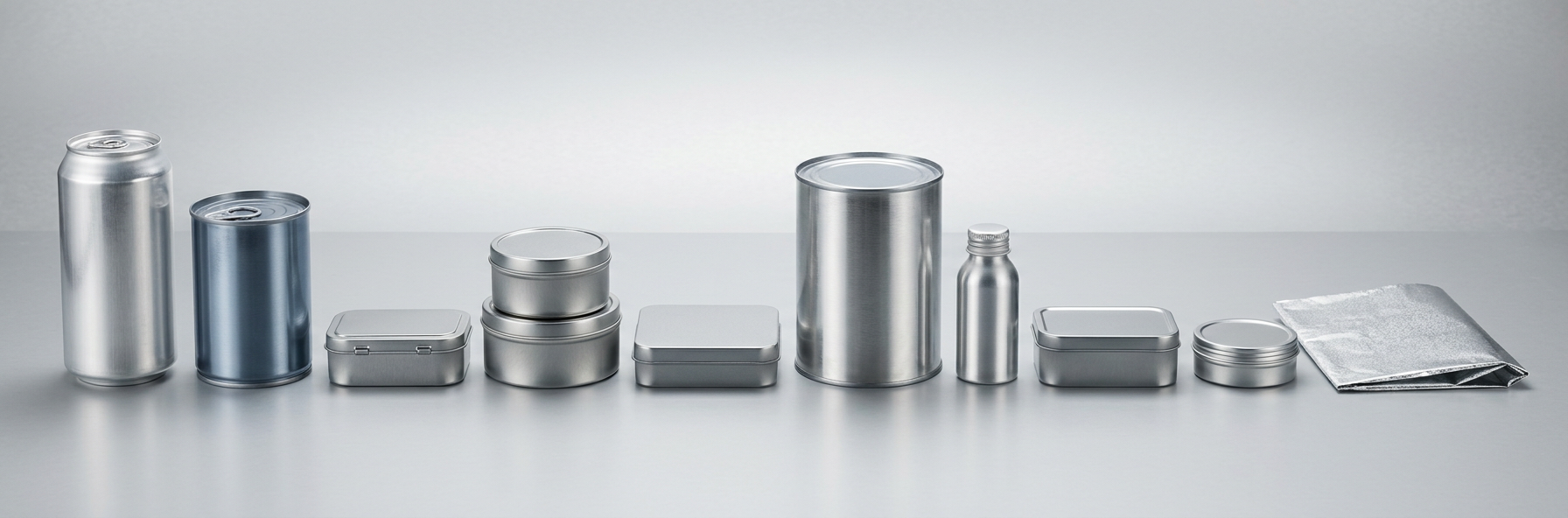
Metal packaging, most commonly seen in the form of cans, tins, and foil, brings a different set of strengths to the table. Metal offers a strong natural barrier against light, oxygen, and moisture without needing additional coatings or laminate layers, which makes it a dependable option for products that require long-term stability without refrigeration.

Metal also tends to hold up well under physical stress, resisting punctures and crushing far better than either paper or most plastic formats. This is part of why canned goods can sit on a shelf for extended periods and still travel through rough handling during shipping without failing.

On the other hand, metal packaging is heavier than paper or plastic, which increases shipping costs and fuel use across large transport volumes. Production processes for metal packaging also tend to be more energy-intensive compared to paper or many plastic formats, although metal packaging generally recycles well and can be reprocessed repeatedly without significant loss of material quality.

Typical Metal Packaging Formats

  • Beverage and food cans
  • Aerosol containers
  • Foil wraps and trays
  • Tins for specialty and gift products

Side by Side Comparison

FactorPaper PackagingPlastic PackagingMetal Packaging
Moisture ResistanceWeak unless coatedGenerally goodStrong
WeightLightLight to moderateHeavier
RecyclabilityWidely acceptedVaries by typeGenerally strong
PrintabilityStraightforwardRequires specific inks or filmsRequires specialized printing methods
Physical DurabilityModerateModerate to goodStrong
Typical Shelf Life SupportShort to moderateModerate to extendedExtended

Environmental Considerations Worth Understanding

Sustainability conversations around packaging rarely have a simple answer, and comparing these three materials makes that clear. Paper packaging often scores well on recyclability and renewable sourcing, assuming responsible forestry practices are followed, but its production process still involves water and energy use that should not be ignored. Plastic packaging can reduce overall material weight and food waste through effective barrier protection, yet its end-of-life outcomes depend heavily on regional recycling infrastructure and the specific plastic type used. Metal packaging supports repeated recycling with minimal quality loss, but its heavier weight and more energy-intensive production process carry their own environmental costs.

None of these materials is automatically the responsible choice in every situation. The right decision usually depends on the specific product, the expected shelf life, the transportation distance, and the recycling infrastructure available in the regions where the product will be sold.

How Industries Typically Choose Between These Materials

Different industries gravitate toward different materials based on what their products actually require.

Food and Beverage Many food brands mix and match depending on the product. Dry goods often use paper-based cartons or bags, shelf-stable liquids and sauces frequently use metal cans, and fresh or moisture-sensitive items often rely on plastic films or containers with tailored barrier properties.

Personal Care and Cosmetics Plastic remains common here due to its moldability and compatibility with liquid or gel formulations, though paper-based secondary packaging is increasingly used for outer boxes and inserts.

Industrial and Chemical Goods Metal containers are frequently chosen for products requiring strong protection against leakage, pressure, or reactivity with air, while plastic drums and containers serve products where weight reduction matters more than maximum durability.

Retail and E-Commerce Shipping Paper-based corrugated boxes dominate this space due to their combination of strength, light weight, and straightforward recyclability, though plastic mailers remain common for lightweight, non-fragile shipments.

A Practical Way to Decide Which Material Fits

Instead of asking which material is generally better, a more useful approach is asking a series of targeted questions about the specific product in question.

  1. Does the product need protection from moisture, oxygen, or light, and how sensitive is it to each?
  2. What shelf life does the product need to maintain in typical storage and retail conditions?
  3. How will the product be transported, and does weight meaningfully affect shipping cost?
  4. What recycling infrastructure exists in the primary markets where the product will be sold?
  5. Does the packaging need to support specific branding, printing, or shelf presentation requirements?

Working through these questions tends to reveal a clearer answer than simply defaulting to whatever material feels familiar or traditional for a given product category.

A Few Myths Worth Addressing

Myth: Plastic packaging is always worse for the environment than paper or metal. This depends heavily on the specific use case. In some situations, lightweight plastic packaging reduces transportation emissions and prevents food waste more effectively than heavier alternatives, even if its recycling rate is lower in certain regions.

Myth: Paper packaging can replace plastic in any application. Paper struggles significantly with moisture and grease resistance unless specially coated, which limits its use in many food and liquid applications without added treatment.

Myth: Metal packaging is only suitable for canned food. Metal packaging extends well beyond canned goods, showing up in aerosol products, specialty containers, and various industrial applications where strength and barrier protection matter more than weight.

As packaging regulations and consumer expectations continue evolving, all three material categories are seeing meaningful innovation. Paper-based solutions are improving barrier coatings to expand their use in moisture-sensitive applications. Plastic packaging is shifting toward simplified mono-material structures designed for easier recycling. Metal packaging continues benefiting from established recycling systems while exploring lighter-weight formats to reduce transportation impact.

Rather than one material eventually replacing the other two, the more likely outcome is continued coexistence, with each material serving the specific needs it handles well. Understanding those strengths and limitations, rather than treating any single material as a universal answer, remains the most practical way to make informed packaging decisions across any industry.